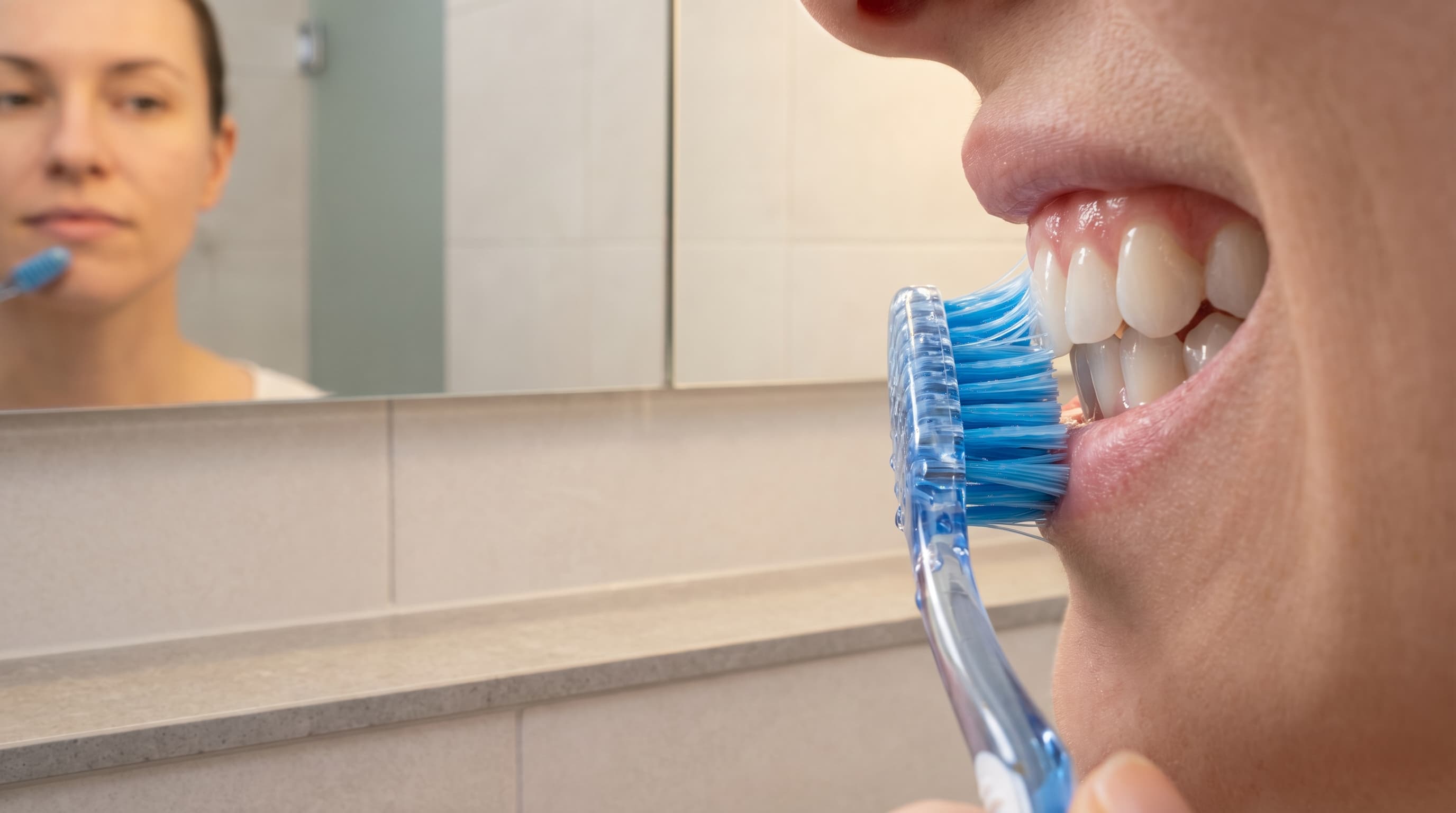
How to Brush Teeth Properly
The average person brushes for 45 seconds using a scrubbing motion. Both are wrong. Here's the technique dentists actually recommend - and why it matters more than which toothbrush you use.
The Modified Bass Method
This is the gold standard technique recommended by the American Dental Association. It's not about scrubbing the surface of your teeth - it's about cleaning the gumline, where plaque actually accumulates and causes disease.
Angle your brush at 45 degrees to the gumline
This is the most important part. Point the bristles where the tooth meets the gum - the gingival sulcus. This is a tiny pocket (1-3mm deep) where bacteria hide. A flat, perpendicular brush misses this completely.
Use gentle, short vibrating strokes
Tiny circular or back-and-forth vibrations - about one tooth width. You're disrupting the bacterial biofilm, not scrubbing a floor. Think of it as massaging, not scraping. If your bristles are splaying outward, you're pressing way too hard.
Sweep away from the gumline
After vibrating at the gumline for a few seconds, flick the brush away from the gums (downward on upper teeth, upward on lower teeth). This sweeps loosened plaque away from the gum pocket rather than pushing it in.
Cover all surfaces systematically
Work in a consistent pattern: outer surfaces (cheek side), inner surfaces (tongue side), then chewing surfaces. Start at the same place every time so you don't miss areas. Most people over-brush the front teeth and neglect the inner surfaces of back teeth.
Brush your tongue
Your tongue harbors more bacteria than your teeth. Brush from back to front with gentle strokes. This is the single most effective thing you can do for bad breath - more effective than mouthwash.
The 2-minute rule (and why it's non-negotiable)
Two minutes is the minimum time needed to effectively disrupt plaque across all tooth surfaces. Studies show that brushing for 2 minutes removes 26% more plaque than brushing for 45 seconds (the average).
The quadrant system
Divide your mouth into 4 quadrants and spend 30 seconds on each:
Upper Right
0:00 – 0:30
Upper Left
0:30 – 1:00
Lower Left
1:00 – 1:30
Lower Right
1:30 – 2:00
Most electric toothbrushes have a built-in quad-pacer that buzzes every 30 seconds. If using a manual brush, use your phone timer.
The 5 most common brushing mistakes
Brushing too hard
The fix: Use gentle pressure - about the weight of an orange. If your bristles splay outward, you're pressing 3-4x too hard. Hard brushing causes gum recession and enamel wear, making teeth MORE sensitive and prone to decay.
Using a scrubbing motion
The fix: Horizontal scrubbing pushes bacteria INTO gum pockets instead of removing them. Use the vibrate-and-sweep technique described above. Let the bristles do the work.
Brushing right after eating
The fix: Acid from food softens enamel for 20-30 minutes. Brushing during this window scrubs away the softened enamel. Wait 30 minutes after eating, or rinse with water immediately and brush later.
Skipping the inner surfaces
The fix: The lingual (tongue-side) surfaces of your teeth collect just as much plaque as the outer surfaces. For front teeth, hold the brush vertically and use the toe of the brush head.
Rinsing with water after brushing
The fix: This washes away the fluoride that's actively protecting your teeth. Spit out the excess toothpaste but don't rinse. Let the fluoride sit on your teeth - this is called "spit don't rinse" and significantly improves fluoride's effectiveness.
When to brush
Twice daily minimum. The two most important times:
Before bed (most important)
During sleep, saliva production drops dramatically. Saliva is your mouth's natural defense against acid and bacteria. Plaque left on your teeth overnight has 6-8 hours of uninterrupted time to cause damage. Never skip the bedtime brush.
Morning (before or after breakfast?)
Brushing before breakfast coats your teeth with fluoride that protects against breakfast acids. Brushing after breakfast removes food debris. Both are valid - if you brush after, wait 30 minutes. The ADA says either is fine.
Choosing the right brush
Always use soft bristles
Medium and hard bristles damage enamel and gums. The brush motor (electric) or your technique (manual) provides the cleaning power - stiff bristles are unnecessary and harmful.
Replace every 3 months
Frayed bristles are significantly less effective at removing plaque. If your bristles are splaying before 3 months, you're pressing too hard.
Electric > manual (for most people)
Electric toothbrushes remove more plaque, enforce 2-minute timing, and prevent over-brushing with pressure sensors. The investment pays for itself in avoided dental bills.
Small head for hard-to-reach areas
A smaller brush head can reach behind your last molars and the inner surfaces of front teeth more easily.
See our full comparison: Best Electric Toothbrush 2026
FAQ
How long should I brush my teeth?
2 minutes minimum, twice per day. Use a timer or an electric toothbrush with a built-in quad-pacer. Studies show most people overestimate how long they brush - when timed, the average is only 45 seconds.
Should I brush before or after breakfast?
Either is fine. Before breakfast: fluoride protects against food acids. After breakfast: removes food debris. If brushing after, wait 30 minutes to avoid scrubbing acid-softened enamel.
Is it bad to brush 3 times a day?
Not inherently, but more than twice daily increases risk of enamel wear and gum recession - especially if your technique involves hard pressure. Twice daily with proper technique is sufficient for most people.
Do I need to brush my tongue?
Yes. The tongue's rough surface harbors bacteria that cause bad breath and contribute to plaque formation. Brush from back to front with gentle strokes, or use a dedicated tongue scraper.
What toothpaste should I use?
Any toothpaste with fluoride and the ADA Seal of Acceptance. Beyond that, choose based on your needs: sensitivity formula for sensitive teeth, whitening for stain removal, or a standard cavity-protection formula.
Can brushing fix yellow teeth?
Brushing removes surface stains (extrinsic) but cannot change your natural tooth color (intrinsic). For surface staining from coffee or tea, a whitening toothpaste can help. For deeper discoloration, see our whitening guide.
Is your technique working?
Your Grin Score measures plaque levels, gum health, and staining - the 3 things proper brushing directly improves. Get your baseline and track your progress.
This guide is for educational purposes only and is not a substitute for professional dental advice.