How to Floss Correctly
Only 30% of Americans floss daily. Most of the 30% who do are doing it wrong - sawing back and forth instead of using the technique that actually removes plaque. Here's the method that works.
Why flossing matters (the 35% problem)
Your toothbrush - even the best electric one - can only reach about 65% of your tooth surfaces. The remaining 35% sits between teeth, in the tight contact areas where teeth touch. This is where most cavities in adults actually form, and where gum disease starts.
Plaque in these interproximal spaces hardens into tartar within 24-72 hours. Once it hardens, only a dental hygienist can remove it. Daily flossing prevents this hardening cycle.
The C-shape technique (step by step)
Use about 18 inches of floss
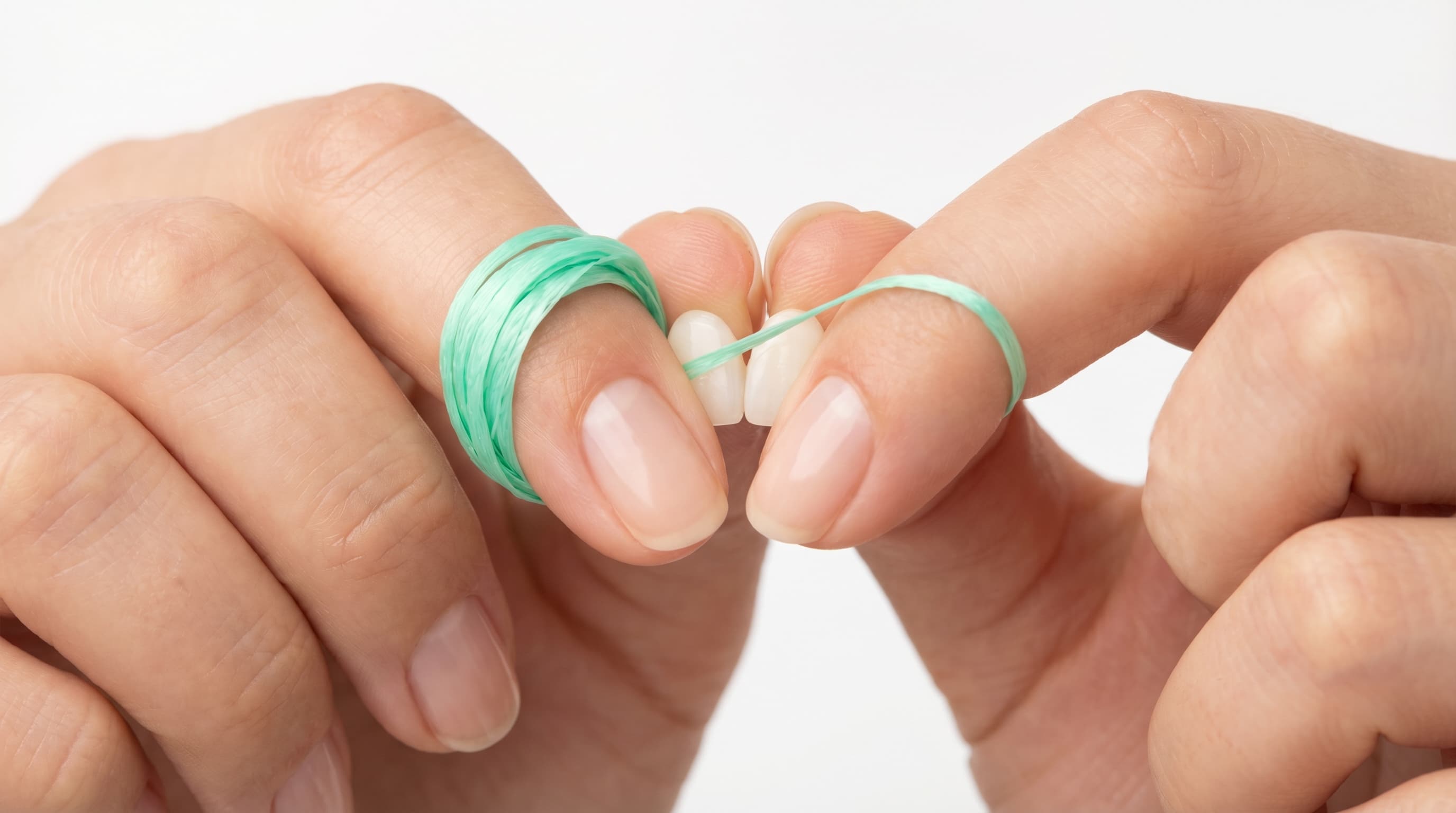
Wind most of it around your middle fingers, leaving 1-2 inches of working floss between your hands. This gives you a fresh section of floss for each tooth gap.
Guide gently between teeth
Use a gentle sawing motion to pass the floss through the contact point. Never snap the floss down - this cuts into the gum papilla and causes pain and bleeding.
Form a C-shape around the tooth
This is the key step most people skip. Wrap the floss around one tooth in a C-shape, hugging the tooth surface. The floss should curve around the tooth, not sit flat between teeth.
Slide up and down along the tooth
Move the floss up and down 2-3 times, going slightly below the gumline. You should feel gentle resistance but not pain. This scrapes plaque off the tooth surface.
Repeat on the adjacent tooth
Before pulling the floss out, re-form the C-shape on the other tooth in the same gap. Every gap has two tooth surfaces to clean.
Use a fresh section for each gap
Unwind a clean section of floss as you move through your mouth. Using the same dirty section just transfers bacteria between teeth.
"It hurts and my gums bleed"
This is the #1 reason people stop flossing - and it's completely backwards. Bleeding gums are a sign of inflammation from NOT flossing enough, not from flossing too much. The gums are inflamed because bacteria have been sitting undisturbed in those gaps.
When you start flossing consistently, here's the typical timeline:
Bleeding and soreness. This is normal. Your gums are inflamed from existing bacteria.
Bleeding decreases noticeably. Less soreness. The bacterial load is dropping.
Minimal or no bleeding. Gums feel firmer. You're turning the corner.
No bleeding, gums look pink and tight. Congratulations - you've reversed gingivitis.
If bleeding persists after 2 weeks of daily flossing, see your dentist - you may have periodontitis that requires professional treatment.
String floss vs water flosser vs floss picks
String floss (traditional)
Best for: Maximum plaque removal at contact points. The C-shape technique physically scrapes the tooth surface. Cheapest option.
Drawback: Hardest to do correctly and consistently. Difficult with braces, bridges, or large hands.
Water flosser
Best for: Compliance (people actually use it), gum health, braces, implants, bridges. Cleans below the gumline better than string floss.
Drawback: Slightly less effective at tight contact points. Costs $30-80. Needs counter space or charging.
Floss picks (disposable)
Best for: Convenience, on-the-go, kids, people who won't use traditional floss. Better than nothing.
Drawback: Can't form a proper C-shape. You're using the same section of floss for every gap. Less effective than both string floss and water flossers.
Bottom line:The best flossing method is the one you'll actually do every day. If you won't use string floss, a water flosser is excellent. If you won't use either, floss picks are still far better than nothing.
Building the flossing habit
Flossing fails because people try to add it as a separate step. Instead, attach it to an existing habit:
Floss BEFORE brushing at night (not after - this way the fluoride from toothpaste reaches between teeth)
Keep floss next to your toothbrush, not in a drawer
Start with just the front teeth if a full mouth feels overwhelming - build up over a week
Use a water flosser in the shower - you're already standing there for 2 minutes
Track your streak in a habit app or the BetterGrin app
FAQ
How often should you floss?
Once daily. Plaque takes 24-72 hours to harden into tartar, so daily flossing prevents the hardening cycle. More than once daily isn't necessary and can irritate gums.
Should I floss before or after brushing?
Before brushing. This loosens plaque and debris so your toothpaste can reach between teeth. It also means the fluoride from brushing can penetrate the newly cleaned interproximal surfaces.
Is it too late to start flossing?
Never. Even if you have existing gum disease, starting to floss will stop further damage and can reverse gingivitis within 2-4 weeks. Your dentist may recommend a professional cleaning first to remove hardened tartar.
Can flossing create gaps between teeth?
No. Flossing does not move teeth or create gaps. If your gums recede after starting to floss, the gums were swollen from inflammation and are now returning to a healthier, tighter state.
What if food always gets stuck in one spot?
Consistent food trapping in one area may indicate a cavity, a gap from a lost filling, or misalignment. Mention it to your dentist - it's worth checking even if it doesn't hurt.
Track your gum health improvement
Flossing is the single biggest factor in gum health. Your Grin Score tracks gum health weekly - start now and watch the improvement.